Hong Kong has one of the best public health systems in the world, and it is close to free, if you hold a Hong Kong ID card.
If you do not, the same bed in the same ward costs you HK$7,400 a day. An intensive care bed costs HK$35,600 a day. Those are the Hospital Authority's own published rates for non-eligible persons, and they are the single most important thing an arriving expat needs to understand about healthcare here.
This page lists every hospital in Hong Kong, all 42 public hospitals across the six Hospital Authority clusters, and all 14 private hospitals, with the official fee schedule and what we can verify about direct billing. We place expat health cover in Hong Kong for a living, and this eligibility gap is the thing clients most often discover too late.
ExpatMedicare has arranged international cover for expatriates since 2001.
The Best Hospitals in Hong Kong for Expats
| Hospital | Location | Type | Standout | Best for |
|---|---|---|---|---|
| Hong Kong Sanatorium & Hospital | Happy Valley | Private | The flagship private hospital; deepest specialist bench in the private sector | Overall best for expats |
| Matilda International Hospital | The Peak | Private | Founded 1907, built for the international community, strong maternity | Best for maternity and personal care |
| Gleneagles Hospital Hong Kong | Wong Chuk Hang | Private + teaching | Opened 2017, newest facility, HKU teaching hospital | Best for modern facilities |
| Hong Kong Adventist Hospital | Stubbs Road | Private | Long-standing international patient handling | Best for outpatient and screening |
| Queen Mary Hospital | Pok Fu Lam | Public (HKIC) | HKU teaching hospital; transplant and tertiary referral centre | Best for complex and rare conditions |
Forty-two public hospitals, fourteen private
Which one you end up in matters less than whether you hold the card that decides the price.
 Hong Kong
 Hong Kong
 Hong Kong
What Makes a Good Hospital for an Expat in Hong Kong?
1. Are you an eligible person, or not? Everything follows from this. Eligible persons, broadly, Hong Kong ID card holders, pay heavily subsidised public rates. Non-eligible persons pay the unsubsidised rate, which runs between 3 and 30 times higher depending on the service, and wider still for the services where the Hospital Authority publishes no eligible-person rate at all. A newly arrived expat waiting on a HKID, or a dependant who never obtains one, sits in the expensive category. Check your status before you need care, not after. We have had this conversation at a hospital cashier's desk more than once, and it is the most expensive conversation in this market.
2. Does it bill your insurer directly? Private hospitals in Hong Kong generally can, arranged per policy. Public hospitals do not, in the way an international insurer expects: you settle and claim back. Our international medical insurance for expats is built around direct-billing networks for exactly this reason.
3. Public depth versus private comfort. Hong Kong's public system holds the tertiary expertise, transplant, major trauma, complex oncology. The private hospitals are more comfortable, faster to access and easier to claim on. For anything genuinely serious, the public teaching hospitals are where the specialists are. Our clients tend to use the private sector for everything routine and the public system when the diagnosis turns serious. Regionally mobile expats often compare against hospitals in Singapore, where the private sector is priced differently.
4. Which cluster you live in. Public hospitals are organised into six geographic clusters, and in an emergency you go to the one that serves your address. Knowing which one that is, before something happens, is worth ten minutes now.
5. Deposit on admission. Private hospitals typically require a substantial deposit unless a letter of guarantee is in place. This is the practical reason direct billing matters more than most people expect, and it is the first thing we check on a client's policy.
The three things that decide a good admission
Not the marble. Whether your insurer is billed directly, whether there is a real emergency department, and whether the specialist you need actually practises there.
 Direct billing
 Emergency
 Specialist depth
Five hospitals, and what each one is actually for
Reviewed on subspecialty depth, insurer recognition and how a foreigner is treated at the admissions desk, not on marketing.
In-Depth Review of the Top 5 Hospitals in Hong Kong for Expats
1. Hong Kong Sanatorium & Hospital, Best Overall for Expats
Hong Kong Sanatorium & Hospital in Happy Valley is the flagship of the private sector and the hospital most international insurers know best. In our experience it is also where a letter of guarantee gets issued with the least friction, which on an unplanned admission is worth more than any single clinical statistic.
- The deepest specialist bench in Hong Kong's private sector: across oncology, cardiology and surgery.
- Widely recognised on international insurer panels: which makes a letter of guarantee straightforward.
- Full inpatient and diagnostic capability: not a clinic with beds attached.
- Central location in Happy Valley, accessible from Hong Kong Island's residential districts.
- Established international patient handling with English throughout.
The honest tradeoff: it is the most expensive private hospital in the territory, and it does not compete on price. On a policy with a modest annual limit or a co-insurance percentage, you will feel it.
Ideal for: expats on comprehensive international plans, Bupa Global, Cigna Global, Allianz Care, AXA, MSH International or Now Health, who want the shortest path to a senior specialist.
2. Matilda International Hospital, Best for Maternity and Personal Care
Matilda has sat on The Peak since 1907 and was built to serve Hong Kong's international community. It still does.
- Purpose-built for the international community: the whole operating culture assumes an expatriate patient.
- Outstanding maternity reputation: consistently the first choice for expat families.
- Small and personal: with a nursing ratio and continuity larger hospitals cannot match.
- The Peak location: convenient for the Mid-Levels and Peak residential belt.
- Long-standing international insurer relationships.
The honest tradeoff: it is small, and it is not a tertiary centre. For major trauma, complex cardiac surgery or rare oncology you will be transferred, most likely to Queen Mary. The Peak location is also awkward from Kowloon or the New Territories.
Ideal for: expectant mothers, families, and anyone who prioritises continuity of care. Check your maternity and family cover waiting period first, typically 9 to 12 months.
3. Gleneagles Hospital Hong Kong, Best for Modern Facilities
Gleneagles opened in Wong Chuk Hang in 2017, making it Hong Kong's newest private hospital. It is a teaching hospital for the University of Hong Kong and part of the Parkway Pantai / IHH group.
- The newest facility and equipment in the private sector.
- A HKU teaching hospital: which brings academic clinical standards into a private setting.
- Part of Parkway Pantai / IHH: the same group as Gleneagles and Mount Elizabeth in Singapore, useful for regionally mobile expats and for insurer recognition.
- Full inpatient, ICU and emergency capability.
- South-side location with easier access than the traditional Mid-Levels cluster.
The honest tradeoff: newer means a shorter track record and a specialist roster still building relative to Hong Kong Sanatorium. Wong Chuk Hang is also less convenient if you live north of the harbour.
Ideal for: expats who want modern facilities and academic standards, and anyone already inside the IHH network elsewhere in Asia.
4. Hong Kong Adventist Hospital, Best for Outpatient and Screening
The Hong Kong Adventist Hospitals, Stubbs Road on Hong Kong Island and Tsuen Wan in the New Territories, have served the international community for decades.
- Two locations covering both sides of the harbour.
- Strong health screening and wellness programmes: which matters where employers mandate annual medicals.
- Long history with international patients and English-language service.
- More moderate pricing than Hong Kong Sanatorium or Matilda.
- Established insurer relationships.
The honest tradeoff: a narrower specialist range than the larger private hospitals, and for complex inpatient care you may be referred on. We route a lot of mid-tier plan holders here for exactly that reason.
Ideal for: routine care, screening and outpatient work, and expats on mid-tier plans who want private access without top-end pricing.
5. Queen Mary Hospital, Best for Complex and Rare Conditions
Queen Mary in Pok Fu Lam is the University of Hong Kong's teaching hospital and one of the territory's principal tertiary referral centres.
- Tertiary and transplant expertise no private hospital in Hong Kong matches.
- HKU teaching hospital: with the research and case volume that drives clinical standards.
- Full trauma and emergency infrastructure.
- The Duchess of Kent Children's Hospital and other specialist units sit within the same cluster.
- Genuinely world-class outcomes in liver transplant in particular.
The honest tradeoff: as a non-eligible person you pay HK$7,400 per day for a general bed and HK$35,600 per day in intensive care. Direct billing with international insurers is not routine. It is a busy public hospital, expect waits and little hand-holding.
Ideal for: anyone facing a complex or rare diagnosis where subspecialty depth should outrank comfort.

Forty-two public hospitals, fourteen private
The Hospital Authority runs the public system across seven clusters. Which one you are sent to is decided by geography, not by choice.
The Full List of Hospitals in Hong Kong
All 14 private hospitals in Hong Kong, per the Hong Kong Private Hospitals Association membership. Note that many published lists say 13, omitting HKSH Eastern Medical Centre, which opened in 2019.
| Hospital | District | Bills insurer direct |
|---|---|---|
| Hong Kong Sanatorium & Hospital | Happy Valley | Yes |
| HKSH Eastern Medical Centre | Shau Kei Wan | Confirm with broker |
| Matilda International Hospital | The Peak | Yes |
| Gleneagles Hospital Hong Kong | Wong Chuk Hang | Yes |
| St. Teresa's Hospital | Kowloon City | Yes |
| Hong Kong Adventist Hospital, Stubbs Road | Stubbs Road | Confirm with broker |
| Hong Kong Adventist Hospital, Tsuen Wan | Tsuen Wan | Confirm with broker |
| Hong Kong Baptist Hospital | Kowloon Tong | Confirm with broker |
| Union Hospital | Tai Wai | Confirm with broker |
| St. Paul's Hospital | Causeway Bay | Confirm with broker |
| CUHK Medical Centre | Sha Tin | Confirm with broker |
| Canossa Hospital (Caritas) | Mid-Levels | Confirm with broker |
| Precious Blood Hospital (Caritas) | Sham Shui Po | Confirm with broker |
| Evangel Hospital | Ho Man Tin | Confirm with broker |
Public hospitals by Hospital Authority cluster
All public hospitals are run by the Hospital Authority and organised into six geographic clusters. Note: Hong Kong West and Hong Kong East clusters were merged into a single Hong Kong Island Cluster in 2026, reducing seven clusters to six, many sources still say seven.
| Hospital | Note |
|---|---|
| Queen Mary Hospital | HKU teaching hospital; tertiary referral and transplant |
| Pamela Youde Nethersole Eastern Hospital | Major acute hospital, Chai Wan |
| Ruttonjee Hospital | Wan Chai |
| Tung Wah Hospital | Sheung Wan |
| Tung Wah Eastern Hospital | Causeway Bay |
| Grantham Hospital | Cardiothoracic and respiratory |
| The Duchess of Kent Children's Hospital at Sandy Bay | Paediatric orthopaedics |
| Tsan Yuk Hospital | Obstetrics and gynaecology |
| Tang Shiu Kin Hospital | Wan Chai |
| St. John Hospital | Cheung Chau island |
| MacLehose Medical Rehabilitation Centre | Rehabilitation |
| TWGH Fung Yiu King Hospital | Rehabilitation and extended care |
| Wong Chuk Hang Hospital | Extended care |
| Cheshire Home, Chung Hom Kok | Infirmary care |
| Hospital | Note |
|---|---|
| Queen Elizabeth Hospital | Major acute and trauma centre |
| Hong Kong Children's Hospital | Tertiary paediatrics for the whole territory |
| Kwong Wah Hospital | Yau Ma Tei |
| Kowloon Hospital | Rehabilitation and extended care |
| Hong Kong Eye Hospital | Ophthalmology |
| Hong Kong Buddhist Hospital | Extended care |
| Our Lady of Maryknoll Hospital | Wong Tai Sin |
| TWGHs Wong Tai Sin Hospital | Rehabilitation |
| Hospital | Note |
|---|---|
| Princess Margaret Hospital | Major acute hospital, infectious disease centre |
| Caritas Medical Centre | Sham Shui Po |
| Yan Chai Hospital | Tsuen Wan |
| North Lantau Hospital | Tung Chung; serves the airport area |
| Kwai Chung Hospital | Psychiatric |
| Hospital | Note |
|---|---|
| United Christian Hospital | Major acute hospital, Kwun Tong |
| Tseung Kwan O Hospital | Acute general |
| Haven of Hope Hospital | Rehabilitation and extended care |
| Hospital | Note |
|---|---|
| Prince of Wales Hospital | CUHK teaching hospital; major acute and trauma |
| Alice Ho Miu Ling Nethersole Hospital | Tai Po |
| North District Hospital | Sheung Shui |
| Shatin Hospital | Rehabilitation |
| Tai Po Hospital | Extended care and psychiatric |
| Bradbury Hospice | Palliative care |
| Cheshire Home, Shatin | Infirmary care |
| Hospital | Note |
|---|---|
| Tuen Mun Hospital | Major acute and trauma centre |
| Pok Oi Hospital | Yuen Long |
| Tin Shui Wai Hospital | Acute and ambulatory |
| Castle Peak Hospital | Psychiatric |
| Siu Lam Hospital | Infirmary care |
Teaching hospitals. Queen Mary Hospital (HKU), Prince of Wales Hospital (CUHK), CUHK Medical Centre, Gleneagles Hospital Hong Kong (HKU) and Prince Philip Dental Hospital. These are where you are referred for anything the private sector cannot handle.
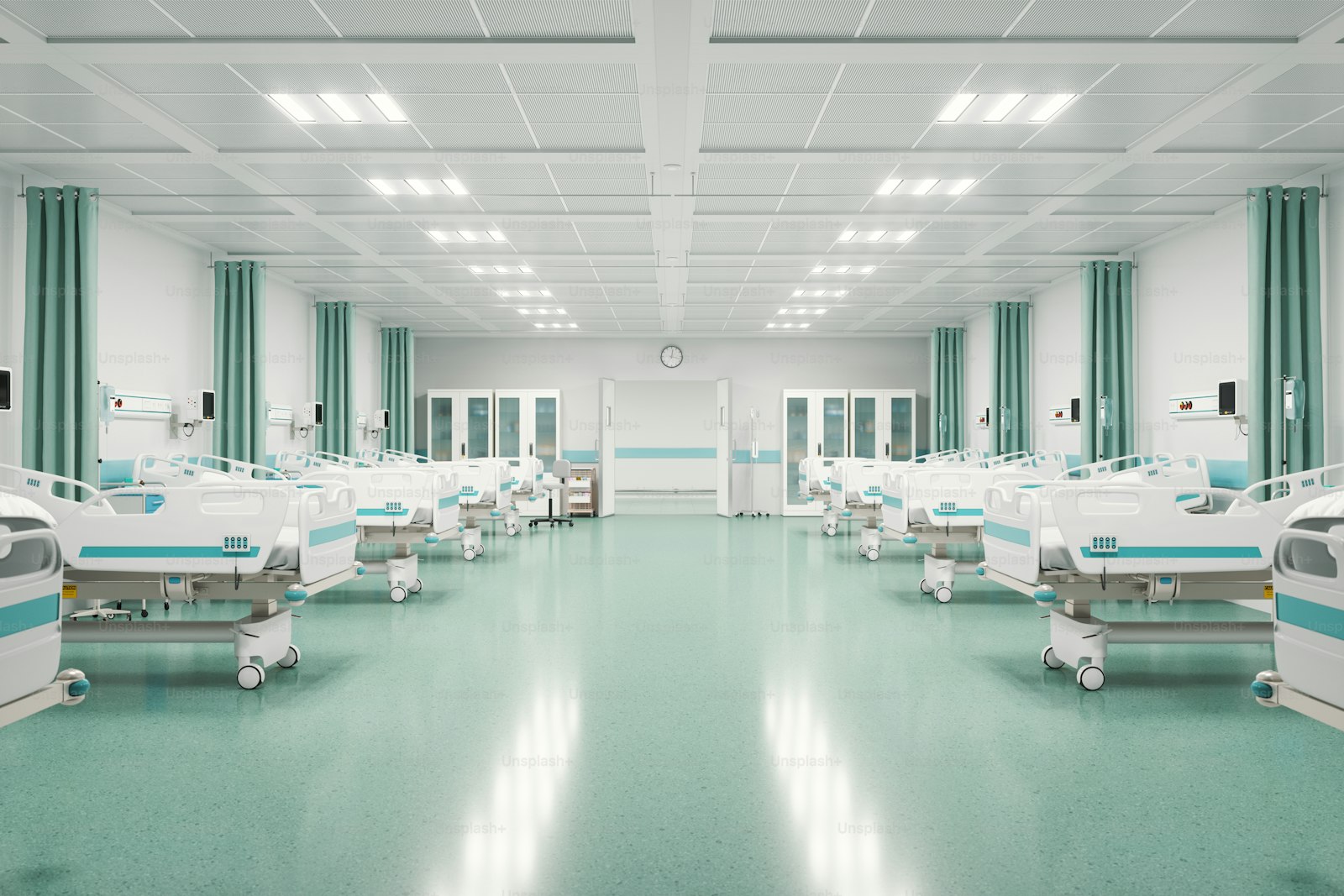
What the private sector gives you that the public one cannot
Not access. You already have that with a valid identity card. What you are buying is speed, a named doctor, and direct settlement.
Which Are the 14 Private Hospitals in Hong Kong?
This comes up constantly, so here is the direct answer. Per the Hong Kong Private Hospitals Association membership, Hong Kong's 14 private hospitals are:

| Hospital | District |
|---|---|
| Hong Kong Sanatorium & Hospital | Happy Valley |
| HKSH Eastern Medical Centre | Shau Kei Wan |
| Matilda International Hospital | The Peak |
| Gleneagles Hospital Hong Kong | Wong Chuk Hang |
| St. Teresa's Hospital | Kowloon City |
| Hong Kong Adventist Hospital, Stubbs Road | Stubbs Road |
| Hong Kong Adventist Hospital, Tsuen Wan | Tsuen Wan |
| Hong Kong Baptist Hospital | Kowloon Tong |
| Union Hospital | Tai Wai |
| St. Paul's Hospital | Causeway Bay |
| CUHK Medical Centre | Sha Tin |
| Canossa Hospital (Caritas) | Mid-Levels |
| Precious Blood Hospital (Caritas) | Sham Shui Po |
| Evangel Hospital | Ho Man Tin |
How Many Hospitals Are There in Hong Kong?
Hong Kong has 42 public hospitals run by the Hospital Authority across six clusters, plus 14 private hospitals, 56 in total, with Kai Tak Hospital under construction in Kowloon Central. Five are teaching hospitals, and those five are where you end up for anything genuinely complex.
HK$35,600 a day in intensive care
That is the non-eligible rate. A two-week ICU stay is roughly HK$500,000 in bed charges alone, before any treatment.
What a Hospital Stay Actually Costs in Hong Kong
Public hospitals in Hong Kong are not free, and for expats they are emphatically not cheap.
Hong Kong's public hospitals are heavily subsidised for eligible persons, broadly Hong Kong ID card holders. For non-eligible persons, which includes expats who have not obtained a HKID, visitors and many dependants, the Hospital Authority charges unsubsidised rates that are among the highest public rates anywhere.
| Service | Eligible person | Non-eligible person |
|---|---|---|
| Accident & Emergency | HK$400 per attendance (Category I and II exempt) | HK$2,100 per attendance |
| Inpatient, acute general bed | HK$300 per day | HK$7,400 per day |
| Intensive care unit | — | HK$35,600 per day |
| High dependency unit | — | HK$21,000 per day |
| Inpatient, psychiatric | HK$200 per day | HK$3,100 per day |
| Nursery | — | HK$3,100 per day |
| Specialist outpatient | HK$250 + HK$20 per drug item | HK$850 + HK$90 per drug item |
| Family medicine clinic | HK$150 + HK$5 per drug item | HK$500 + HK$40 per drug item |
| Day procedure, ambulatory facility | HK$250 per attendance | HK$7,400 per attendance |
| Day oncology treatment | HK$250 per attendance | HK$1,300 per attendance |
| Haemodialysis | — | HK$3,000 chronic / HK$6,000 acute |
| Ophthalmic day procedure | — | HK$950 per attendance |
| Geriatric day hospital | HK$100 per attendance | HK$2,700 per attendance |
| Rehabilitation day hospital | HK$100 per attendance | HK$1,900 per attendance |
| Psychiatric day hospital | Free | HK$1,800 per attendance |
The intensive care line is the one to sit with. A non-eligible person pays HK$35,600 a day. The Hospital Authority publishes no eligible-person rate for intensive care, so the cleanest like-for-like comparison is the acute general bed: HK$300 a day if you are eligible, HK$7,400 if you are not, roughly 25 times. A two-week intensive care stay as a non-eligible person is roughly HK$500,000 in bed charges alone, before treatment.
This is the number we put in front of every client arriving without a HKID, because it is the one that changes what cover they buy.
Hong Kong also operates a HK$10,000 cap on public medical fees as a safety net, alongside a fee waiving mechanism, but these apply to eligible persons, not to the non-eligible rates above.
Eight or more plans for Hong Kong, priced in HKD
Priced as a non-eligible person? Every plan card carries the numbers that decide whether it survives a HK$35,600-a-day intensive care stay, not just a headline premium.
- The insurer behind each plan, named on the card
- Annual limit, the number that decides a serious claim
- Deductible, adjustable from nil upwards
- Direct billing, which no public hospital offers
- Evacuation and repatriation, included or not
- Monthly and annual premium, side by side
What Is the Best Hospital in Hong Kong?
For complex or rare conditions, Queen Mary Hospital and Prince of Wales Hospital, the HKU and CUHK teaching hospitals, hold the deepest tertiary expertise, with Queen Mary internationally recognised for liver transplant. For private care, Hong Kong Sanatorium & Hospital has the strongest specialist bench, Matilda International the best reputation for maternity and personal care, and Gleneagles Hong Kong the newest facilities. The right answer depends on your condition, your policy and which side of the harbour you live on.
What Is the Most Expensive Hospital in Hong Kong?
Among private hospitals, Hong Kong Sanatorium & Hospital and Matilda International sit at the top of the market. But the more useful answer for an expat is that the most expensive place to be treated in Hong Kong is a public hospital as a non-eligible person: HK$35,600 per day in intensive care exceeds the daily room rate at any private hospital in the territory. The public system is only cheap if you hold the right ID.
How Do You Choose the Right Hospital in Hong Kong?
This is the order we work through it with a new client.
First, confirm whether you are an eligible person. Nothing else matters as much. If you are waiting on a HKID, or a dependant will not obtain one, you are exposed to the non-eligible rates above and you need cover that reflects that.
If you are on a comprehensive international plan, you have the run of the private sector. Choose on specialist and location, Hong Kong Sanatorium or Gleneagles on the island, Union or CUHK Medical Centre in the New Territories.
If your employer provides a local group plan, check the ward entitlement and whether it caps at a semi-private room. Adventist and St. Paul's are often the better-value options in this bracket.
If you are expecting a baby, Matilda and Hong Kong Sanatorium are the leading private options. Confirm the maternity waiting period on your policy before you commit.
If you have a complex or rare diagnosis, the public teaching hospitals are where the expertise is, but understand the non-eligible cost before you are admitted.
Know your cluster. In an emergency, ambulances take you to the public hospital serving your address, not the one you would choose.
Settle your eligibility status in week one
This single fact decides whether an admission costs hundreds or hundreds of thousands. It is not a question to answer at a cashier's desk.
Tips on Getting Admitted Without a Billing Surprise
- Confirm your eligibility status in writing. This single fact determines whether an admission costs hundreds or hundreds of thousands. We ask every Hong Kong client to settle it in week one, not in an emergency.
- Get a letter of guarantee before any planned admission. Private hospitals require a substantial deposit without one.
- Ask which ward class your policy actually covers. Private, semi-private and ward rates differ sharply, and the gap appears on the invoice.
- Check whether your policy covers evacuation. Worth reviewing your emergency and inpatient cover and evacuation and repatriation cover before you need either.
- Keep your insurer's emergency number in your phone, not in a drawer.
Sort the cover before you need it. Our quote engine prices international plans for Hong Kong in HKD and shows direct billing and evacuation cover up front, so you know who pays the hospital cashier.
Get a quote in 60 seconds →Frequently Asked Questions
Related resources: Hospitals in Singapore · Hospitals in Shanghai · Expat health insurance in Hong Kong · International medical insurance for expats · Maternity and family cover · Emergency and inpatient cover · Evacuation and repatriation cover · Get a quote in 60 seconds.
Sources
This information is for general guidance and does not constitute medical or financial advice. Fees are the Hospital Authority's published rates as at the date of publication and are subject to revision; confirm current charges and your direct billing arrangements before any admission.