
Expat health insurance in Dubai is compulsory. Under Dubai Law No. 11 of 2013 every resident must hold cover from a permitted insurer, and a residence visa is not issued or renewed without it. Your employer must buy it and is prohibited from deducting the cost from your salary. The statutory floor is the Essential Benefits Plan, with an annual limit of AED 150,000, which is roughly the cost of one serious inpatient episode at a private hospital in Dubai.
So the question on this page is not whether you are insured. It is whether the minimum is enough, and what the gap costs to close.
ExpatMedicare has arranged international medical cover for expatriates since 2001, and compares plans from 25+ international insurers. About us.
Dubai expat health insurance at a glance
- Are on the Essential Benefits Plan
- Check the annual limit and the co-insurance before you need them
- Have family on your sponsorship
- You are the sponsor, so their cover is your legal obligation
- Expect to leave the UAE
- International cover, because your mandatory plan ends with the visa
- Are planning a pregnancy
- The statutory maternity benefit is capped. Check the numbers early
- Are self-employed or on a Golden Visa
- The obligation is still yours. No employer is buying it for you
- Want the lowest premium
- Adjust cover area and deductible first, before cutting benefits

Cover is a condition of your residence visa
Not advice, not a benefit. Under Dubai Law No. 11 of 2013 your sponsor must hold it for you, and the visa does not issue without it.
Is health insurance mandatory in Dubai?
Yes, and that is the difference between this market and almost every other one. Dubai made health insurance a condition of residency rather than a consumer choice, which changes what you should be shopping for.
The legal position
Dubai Law No. 11 of 2013 established mandatory health insurance in the emirate, with its implementing bylaw issued as Administrative Resolution No. 78 of 2022. It was implemented in three phases between 2014 and 2016 and now applies to every Dubai resident, including employees, dependants, freelancers, Golden Visa holders and domestic workers. Without valid cover from a UAE-licensed insurer, the residence visa is not issued or renewed.
Abu Dhabi operates a separate regime under the Department of Health with its own rules and the same AED 150,000 minimum annual benefit.
What your employer must do. Every private sector employer in the UAE must buy health insurance for its employees and bear the full cost. Deducting the premium from an employee's salary is prohibited. Sponsors are separately responsible for insuring their dependants and any domestic staff. In Dubai, an employer without compliant cover faces a fine of AED 500 per month for each uninsured employee, alongside visa renewal blocks and trade licence complications. Employers designing a scheme should start with group medical insurance and business cover.
Insured by law. Covered is a separate question.
A residence visa is not issued or renewed without cover. What that cover actually pays for is what this page is about.
 Dubai
Dubai Dubai
DubaiWhat does the mandatory minimum cover in Dubai?
This is the section that matters, because most expats have never read their own mandatory policy.
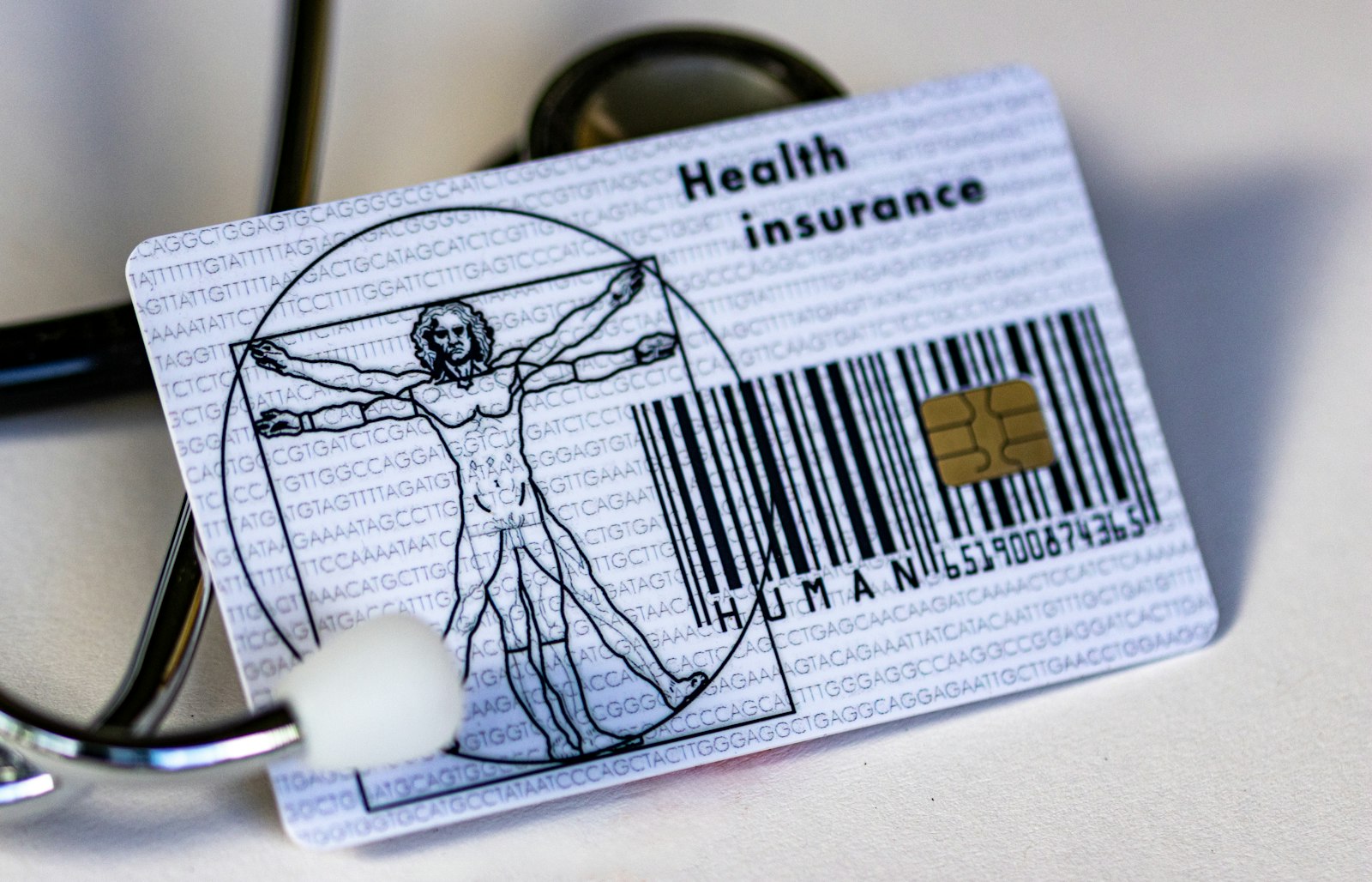
| Feature | Essential Benefits Plan |
|---|---|
| Annual aggregate limit | AED 150,000 |
| Who it applies to | Employees earning AED 4,000 a month or less, from day one of employment |
| Inpatient co-insurance | 20%, capped at AED 500 per encounter and AED 1,000 a year |
| Maternity, antenatal | Blood tests, three ultrasounds and eight pre-delivery visits |
| Maternity, delivery | Up to AED 7,000 for a normal birth, up to AED 10,000 for a medically necessary caesarean |
| Maternity co-insurance | 10%, outpatient and inpatient |
| Available from | DHA-permitted insurers only. The DHA participating insurer register is the authoritative list. |
AED 150,000 is roughly the cost of one serious inpatient episode at a private hospital in Dubai. It is a floor designed to stop people being uninsured, not a ceiling designed to make them comfortable. The gap between the statutory minimum and a plan that survives a cancer diagnosis or a complicated delivery is the entire commercial case, and it is made with the regulator's own numbers rather than ours.
Find out what your mandatory plan leaves out. Answer four questions and see real plans from 25+ international insurers, priced for your age and your family. Takes about 15 seconds.
Get my quote →What are your options for expat health insurance in Dubai?
In Dubai the routes are not alternatives to being insured. They are levels of being insured.
| Statutory minimum (EBP) | Enhanced employer plan | International (IPMI) | |
|---|---|---|---|
| Legal compliance | Yes, this is the floor | Yes | Yes, if UAE-compliant |
| Annual limit | AED 150,000 | Set by the employer | Set by you, typically far higher |
| Network | Restricted | Wider, employer's choice | Widest, per cover area |
| Treatment outside the UAE | No | Limited | Yes, per cover area |
| Survives leaving the job | No | No | Yes |
| Survives leaving the UAE | No | No | Yes |
| Who controls it | Your employer | Your employer | You |
| Who pays | Your employer, by law | Your employer | You |
The statutory minimum
The Essential Benefits Plan is compliant, cheap, and narrow. It exists so that nobody in Dubai is uninsured, and it does that job. It is not designed to be the whole of your protection.
Best for: meeting the law. Treat it as the floor, not the plan.
Enhanced employer cover
Most professional employers buy well above the statutory minimum. The limits, the network and the maternity benefit are all better, and someone else pays. The risk of employer cover is concentration: the policy belongs to your employer and ends the day the job ends, and if a condition developed while you were covered you may have to disclose it as pre-existing when you buy your own.
Best for: a strong foundation, still not a complete plan.
International private medical insurance
International private medical insurance is the route described on our international medical insurance page. It is the only one that follows you out of the job and out of the country, keeps your medical history and accrued waiting periods, and carries limits measured in millions rather than in AED 150,000. Confirm any international plan is UAE-compliant so it also satisfies the visa requirement.
Best for: expats who expect to move again, anyone with a medical history to place, families planning children, and anyone who wants cover that outlasts a job.

AED 150,000 is a floor, not a ceiling
It exists so that nobody in Dubai is uninsured, and it does that job. It is not designed to be the whole of your protection.

The co-insurance nobody reads
Even on the statutory minimum you carry 20% of an inpatient bill, capped at AED 500 per encounter. Most people meet that at the cashier.
How do claims work on expat health insurance in Dubai?
International private medical insurance in Dubai pays the actual cost of treatment, either by settling directly with the hospital or by reimbursing you against submitted medical bills. It does not pay a lump sum. Critical illness insurance is a separate product that pays a single fixed sum on diagnosis of a listed condition, with no bills required and no link to what treatment costs. The two are confused because both are sold to the same expatriate buyer.

Dubai adds a second layer that Singapore and Hong Kong do not. Even on the statutory minimum you carry a 20% inpatient co-insurance, capped at AED 500 per encounter and AED 1,000 a year, and a 10% co-insurance on maternity. Those caps are the part most people discover at the cashier rather than at purchase. Ask which specific hospitals your insurer settles with directly, not whether they have a network. Our emergency and inpatient cover page explains how settlement works in practice.
How much does expat health insurance cost in Dubai?
Dubai is the fourth most expensive market in the world for international private medical insurance, according to Pacific Prime's Cost of International Health Insurance Report.
| Market | Individual | Family | Global rank |
|---|---|---|---|
| United States | 9,817 | 28,250 | 1 |
| Hong Kong | 7,810 | 22,067 | 2 |
| Singapore | 7,028 | 20,351 | 3 |
| Dubai | 5,687 | 17,637 | 4 |
What the statutory minimum costs. Dubai is unusual in that the regulator sets the price band. The Dubai Health Authority announces the premium ranges that permitted insurers must work within for the Essential Benefits Plan, which is why the cheapest compliant cover in Dubai costs roughly the same whoever sells it.
[BUILD STEP OUTSTANDING: Table 4, the Essential Benefits Plan premium band, pulled directly from the Dubai Health Authority with the announcement date in the caption. Broker sources report a range of roughly AED 650 to AED 725 a year for an employee, with higher bands for non-working dependants and elderly parents, but a statutory price band belongs in the regulator's own publication and nowhere else, so no figure is stated here.]
What moves your premium
- Cover area: including the United States raises the premium substantially against worldwide-excluding-US or region-limited cover. Unless you spend significant time in the US, excluding it is the most effective way to cut cost.
- Age: pricing is heavily age-banded and the curve steepens after 50.
- Deductible: choosing an annual excess lowers the premium, and it is the fastest single lever.
- Outpatient cover: adding GP visits, specialist consultations and diagnostics raises the base premium.
- Maternity: a maternity benefit adds cost and carries a waiting period that starts before conception.
- Underwriting method: full medical underwriting versus moratorium changes both price and certainty.
- Medical history: declared conditions may attract an exclusion or a premium loading.
These are the general drivers. The only number that matters is yours. Run a quote →
What a policy actually pays for
Inpatient care is the core of every plan. The rest is chosen, and the choosing is where the cost and the gaps both sit.
 Usually covered
 Add-on
 Add-on
 Usually covered
 Add-on
 Add-on
What does expat health insurance cover in Dubai?
Usually covered. Inpatient and day-patient treatment, meaning hospital accommodation, surgery, intensive care and specialist fees. Day surgery for procedures not requiring an overnight stay. Cancer care, covering diagnosis, chemotherapy and radiotherapy. A private room, which most plans cover as a minimum. Medical evacuation and repatriation, meaning transfer to appropriate care, or home. Diagnostics such as scans, pathology and imaging. And rehabilitation, time-limited after an inpatient episode.
Covered only if you add it. Outpatient consultations and GP visits. Maternity and newborn cover, with a waiting period. Dental and optical. Mental health treatment, increasingly included but with limits that vary widely. Chronic condition management. And critical illness, which is a separate lump-sum product rather than a medical insurance benefit.
Usually excluded. This is the part most guides skip, and it is the one that causes claim disputes. Conditions you had before the policy started, unless specifically accepted. Treatment that is cosmetic rather than medically necessary. Fertility treatment, on most standard plans. Experimental or unproven treatment. Injuries from professional sport or specified hazardous activities. Treatment sought primarily by travelling to another country for it. And costs above your annual benefit limit or outside your cover area.
Read the exclusions before you read the brochure. If an insurer's exclusion list is hard to find, that tells you something.
The three questions underwriting actually turns on
Each one is decided before your policy starts, and none of them can be renegotiated after a claim.



How are pre-existing conditions, maternity and dependants covered?
A pre-existing condition is any condition you had symptoms of, sought advice for, or received treatment for before the policy began. It does not have to have been formally diagnosed. Under full medical underwriting you declare your history upfront and the insurer accepts it, excludes it, or applies a loading, so you know where you stand from day one. Under moratorium underwriting nothing is declared upfront: conditions from a defined look-back period are excluded, and may become eligible after a continuous run of time without symptoms, treatment or advice. Both windows vary by insurer, so check the wording. What matters is that you disclose honestly, because a non-disclosure discovered at claim stage can void the policy.
On maternity, start with the statutory caps, because they are the numbers that surprise people: up to AED 7,000 for a normal delivery and up to AED 10,000 for a medically necessary caesarean, with 10% co-insurance. Cover above that is bought, not given. Maternity cover is not automatic and cannot be added once you are pregnant. Cigna Global and Allianz Care both apply a 12 month waiting period. See our maternity and family cover.
Dependants carry extra weight in Dubai, because sponsorship is a legal obligation rather than a preference. If you sponsor a spouse, children or domestic staff, insuring them is your responsibility and their residence visas depend on it. Family plans are cheaper than separate individual policies, and children can often be added at any renewal. Older parents joining you are a different question, because cover for seniors is underwritten differently and priced accordingly.

Compare the schedule, not the brochure
Annual limit, co-insurance, network tier and the exclusion list. Four lines that decide everything a glossy benefit summary leaves out.
How do you choose a health insurer in Dubai?
Price is the easiest feature of an expat health insurance policy to compare and the least useful. These are the questions that decide whether a policy works when you need it.
- Is renewal guaranteed for life? Some plans reserve the right to decline renewal or re-underwrite you after a claim. That is the difference between insurance and a temporary arrangement.
- Does the insurer settle directly with Dubai hospitals? Direct settlement means you are not funding a five-figure bill and waiting for reimbursement. Ask which specific hospitals, not whether they have a network.
- How are pre-existing conditions handled? Full underwriting or moratorium, and what exactly the terms are.
- What happens if you leave the UAE? For international cover it should continue, subject to your cover area. Mandatory and employer cover ends with the visa.
- How do premiums change with age? Ask for the age-banding structure, not just this year's price.
- Who handles a disputed claim? With an insurer directly, you do. With a broker, we do, and that is what we are here for.
- Is the plan DHA-permitted? It has to satisfy the visa requirement as well as your medical needs, and the DHA participating insurer register answers it.
Who is actually in this market
International insurers: Cigna Global, AXA Global Healthcare, Allianz Care and Bupa Global are the names you will encounter most often for portable cover. UAE insurers: Daman, Sukoon (formerly Oman Insurance, rebranded in 2022), Orient Insurance and Salama all write health cover here, and only DHA-permitted insurers may issue a compliant Dubai policy. The DHA participating insurer register is the authoritative record of who may. Eligibility, annual limits, network access and whether cover survives a change of employer differ by insurer, so check those before comparing price.

Arranged before the visa, not after it
Cover has to be in place for the residency medical and the Emirates ID. Leaving it to the last week is how people end up on the statutory floor by default.
How do you get expat health insurance in Dubai?
ExpatMedicare provides international health insurance quotes for expatriates in Dubai online, without a phone call. The quote needs three inputs: your age, the number of people to be covered, and your chosen cover area.
- Answer four questions: your age, who needs cover, where you want to be covered, and your budget. About 15 seconds.
- See real plans immediately: the quote engine prices you against 25+ international insurers and returns the plans that match, with premiums attached.
- Compare like for like: annual limit, outpatient, maternity, evacuation and direct billing, side by side.
- Complete underwriting: full disclosure or moratorium, depending on the plan. We will tell you which is likely to suit your history.
- Cover starts on the date you choose, and we stay involved for claims, admissions and renewals.
Get your personalised quote → or speak to an adviser.
See your premium in 15 seconds. No form to fill in, no callback to wait for. Compare plans from 25+ international insurers, matched to what you actually need.
Get my quote →
Twenty-five years of expatriate placements
25+ international insurers on one panel, independent of all of them, and still here at renewal and at the claim.
Why choose ExpatMedicare
- Arranging international medical cover since 2001: a quarter of a century placing expatriate cover.
- 25+ international insurers on one panel: every quote names the insurer behind the plan.
- Independent: we are not tied to a single insurer, so we have no reason to steer you.
- Priced before you talk to anyone: see real premiums in about 15 seconds, with no form and no callback.
- We handle disputed claims: that is the part you cannot do alone, and it is what a broker is for.

Frequently asked questions
Also covering expat health insurance in Singapore and Hong Kong, and our United Arab Emirates country hub.
Sources
- 01Government of Dubai, Law No. 11 of 2013 concerning health insurance in the Emirate of Dubai
- 02Government of Dubai, Administrative Resolution No. 78 of 2022, implementing bylaw
- 03Dubai Health Authority, participating insurer register
- 04Dubai Health Authority, Essential Benefits Plan schedule of benefits
- 05Department of Health, Abu Dhabi, mandatory health insurance scheme
- 06Cigna Global, optional benefits and maternity waiting periods
- 07Allianz Care, international health insurance with maternity cover
- 08Pacific Prime, Cost of International Health Insurance Report
This guide is general information about insurance products, not personal financial advice. Premiums, benefits, waiting periods, exclusions and underwriting vary by insurer and by plan. Statutory minimum benefits and premium bands are set by the Dubai Health Authority and are subject to revision. Always read the policy wording. Speak to a licensed adviser about your own circumstances before buying.