
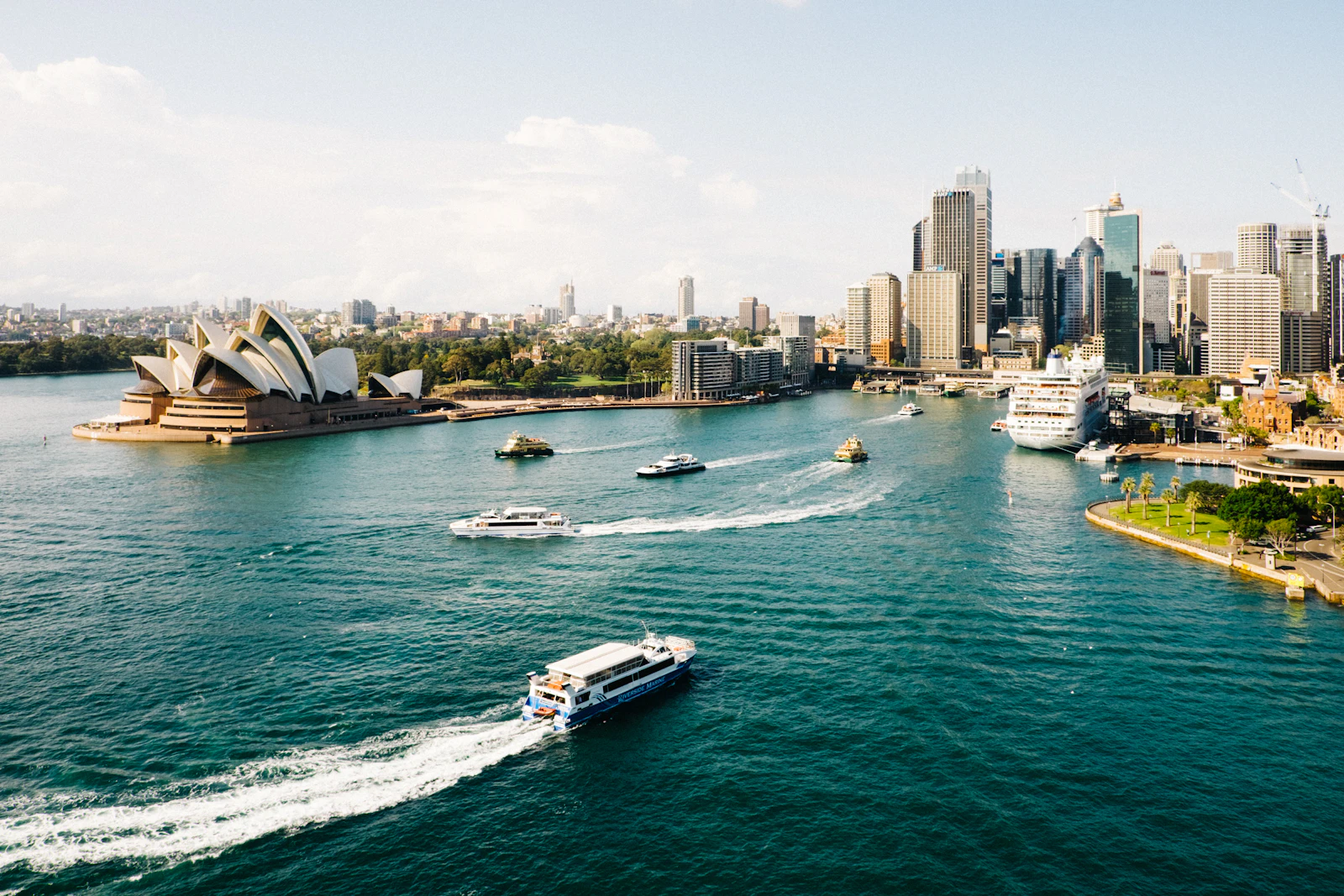
The two cities compete on tax, visas, schools and universities. Expats compare private hospitals — Matilda against Mount Elizabeth, Gleneagles against Adventist.
Almost nobody compares the public systems. Which is strange, because on that measure the two cities are not merely different. They are opposites — and the difference changes what insurance you should buy.
The finding
In Hong Kong, a working expat with a valid HKID is an "Eligible Person" and pays the same heavily subsidised public hospital rates as any Hong Kong resident.
In Singapore, a working expat on an Employment Pass receives no government healthcare subsidy at all. Singapore withdrew subsidies for non-PR foreigners in October 2007. Permanent Residents retain subsidy, but at ten percentage points below citizens.
Same region. Same profile of person. Completely different exposure.
Hong Kong: what the 2026 reform actually did
Hong Kong overhauled public healthcare fees on 1 January 2026 — the first adjustment since 2017. For Eligible Persons:
- A&E attendance rose from HK$180 to HK$400, but patients triaged Category I (critical) and Category II (emergency) are exempted entirely.
- Admission fees were waived; daily inpatient charges increased.
- Tiered charges were introduced for tests, and a co-payment model for pathology.
- Crucially, an annual fee cap of HK$10,000 per person now applies across inpatient and outpatient fee items.
Read that cap again. For an expat holding a valid HKID, the public system's exposure for covered fee items is bounded at roughly HK$10,000 a year. That is not a healthcare system. That is a stop-loss.
Eligibility is broader than most expats assume: valid HKID holders, and resident children under 11. Most working expatriates in Hong Kong qualify.
Singapore: no subsidy, and no MediShield Life
Singapore's public hospitals are outstanding. They are also, for you, priced at unsubsidised rates.
- Class A and B1 wards are unsubsidised even for citizens.
- Class B2 and C carry means-tested subsidies available only to citizens and PRs.
- MediShield Life and MediSave are closed to non-residents.
- Foreigners typically pay two to three times what a citizen pays for the same episode.
Singapore does mandate employer-provided medical insurance for Work Permit and S Pass holders — but that requirement does not extend to Employment Pass holders. If you are a professional expat in Singapore, there is no statutory floor beneath you at all.
Side by side
| Expat access to subsidised public care | Yes, with valid HKID | No — EP, S Pass and Work Permit holders receive no subsidy |
| A&E | HK$400; free if triaged critical or emergency | Unsubsidised rates |
| Annual out-of-pocket cap on public fees | HK$10,000 per person | None applicable to foreigners |
| National catastrophic scheme | Public system itself | MediShield Life — citizens and PRs only |
| Statutory insurance requirement | None | Work Permit and S Pass only, not EP |
| Main weakness | Congestion and long waits for non-urgent specialist care | Cost, with no safety net |
The trap inside Hong Kong's safety net
Before you conclude Hong Kong expats can self-insure, read the exclusion carefully.
The HK$10,000 annual cap excludes self-financed medications and devices. In Hong Kong, many of the expensive modern cancer drugs — the targeted and immunotherapy agents that now carry a large share of oncology cost — sit precisely in that self-financed category.
So the cap protects you brilliantly against the ordinary and leaves you exposed to the extraordinary. Hospital fees are bounded. The drug that keeps you alive may not be. The Hospital Authority has committed additional reform revenue toward reducing self-financed drug costs for cancer and rare disease patients, which may improve this over time — but it is the position today.
What this means for your insurance
In Hong Kong, the public system is a genuine fallback for an HKID holder. That strengthens the case for a high-deductible, high-limit plan — you accept meaningful out-of-pocket exposure knowing the public system caps ordinary costs, and you buy insurance for the catastrophic and the self-financed. What you must not do is assume the HK$10,000 cap covers cancer drugs. Check your plan's outpatient and prescribed-drug benefits specifically.
In Singapore, there is no equivalent floor. A significant medical event can produce a five-figure bill with nothing beneath it. Insurance is not a comfort purchase; it is the whole of your protection. High deductibles are a much riskier strategy here, and the 'I'll just use the public hospital' fallback that works in Hong Kong does not exist in the same form.
If you are moving between the two cities, this is the shift almost nobody accounts for. Leaving Hong Kong means leaving Eligible Person status behind. A plan calibrated to Hong Kong's public backstop is under-specified for Singapore — and you will be arranging cover at whatever health you have on the day you move, not the day you first insured.
The short version
Hong Kong lets you into its public system and caps what it charges you. Singapore does not. Both cities have excellent medicine; only one of them shares it with you at resident prices.
Buy accordingly.
“Ask Mira how your plan performs in each city — including the drugs that sit outside Hong Kong's fee cap.”
Written and verified by Jean-Marc Herbet — Managing Director, Expat Medicare. Thirty years advising expatriates on international private medical insurance across Asia. Expat Medicare is a licensed IPMI brokerage. General information, not personal, medical or financial advice. Public healthcare fees, eligibility rules, subsidy frameworks and statutory insurance requirements change and are set by the Hospital Authority and Health Bureau in Hong Kong and by MOH and MOM in Singapore — verify current figures with those authorities before relying on them.
Want this checked against your own situation?
Get an instant comparison of international plans matched to your age, country and family.
Get your instant quote